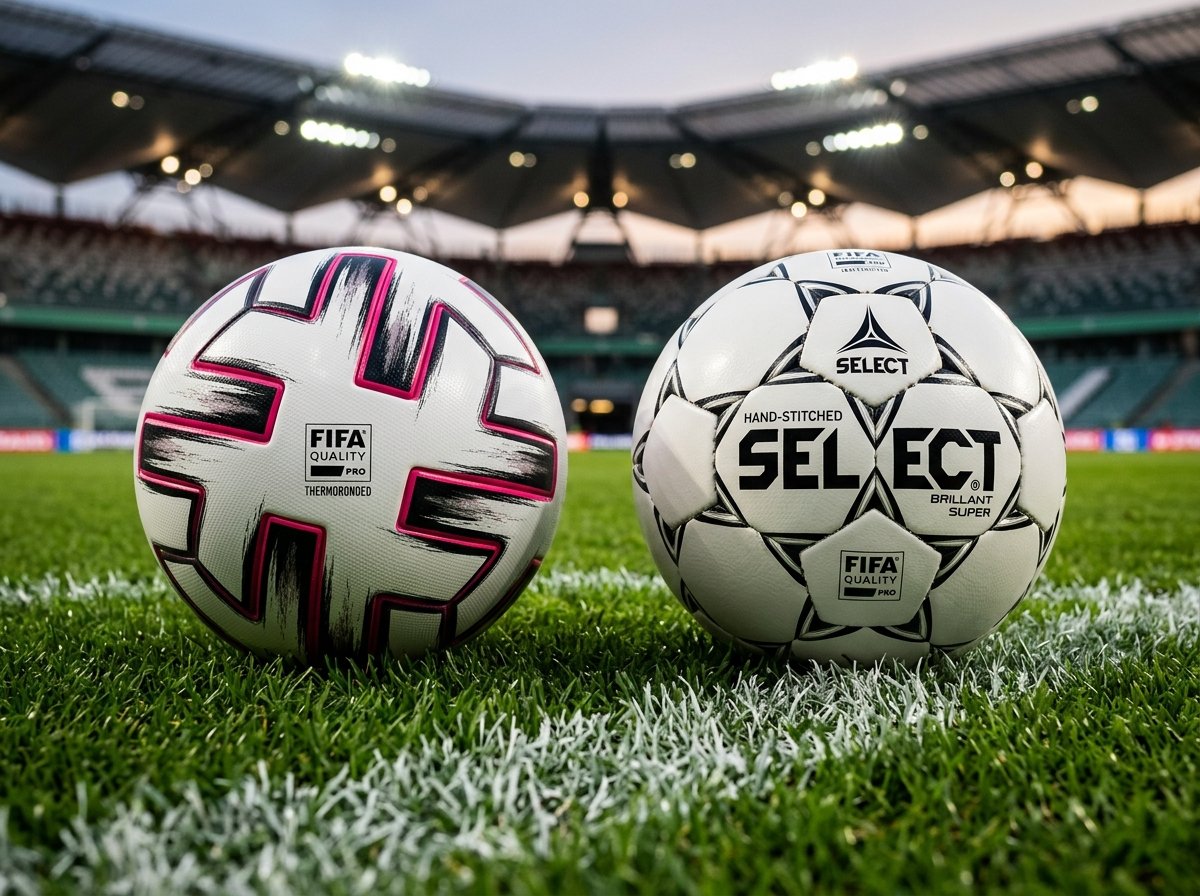
Choosing the right soccer ball construction is crucial for match performance and budget allocation. Here is a breakdown of thermobonding, hand-stitching, and machine-stitching from the world's soccer ball manufacturing capital.
Thermobonded vs. Hand-Stitched Soccer Balls: A Wholesale Buyer's Guide for 2026
For football clubs, sports retailers, academies, and distributors, choosing the right type of soccer ball is about more than appearance. The construction method directly impacts performance, durability, consistency, and overall value.
Two of the most popular options in today's football market are thermobonded soccer balls and hand-stitched soccer balls. Both are widely used around the world, but each serves a different purpose and buyer segment.
If you're planning to source footballs in bulk, understanding the differences between these two manufacturing methods can help you make a smarter purchasing decision.
What Is a Thermobonded Soccer Ball?
A thermobonded soccer ball is manufactured using advanced heat-bonding technology rather than traditional stitching.
Instead of sewing panels together, the panels are fused using high-temperature bonding techniques. This creates a seamless surface that improves consistency and performance.
Thermobonded footballs are commonly used in:
- Professional matches
- Elite football academies
- Competitive tournaments
- Premium sports brands
- High-performance training programs
Many modern match-quality footballs utilize thermobonded construction because of its superior playing characteristics.
Benefits of Thermobonded Soccer Balls
Superior Water Resistance
Because there are no stitched seams, thermobonded footballs absorb significantly less water.
This helps maintain consistent performance during rainy conditions.
More Consistent Flight
The seamless design creates a smoother surface, resulting in improved aerodynamics and more predictable ball movement.
Better Shape Retention
Heat-bonded construction helps maintain the ball's shape even after extensive use.
Premium Match Performance
Thermobonded footballs are often preferred for professional and competitive-level play.
What Is a Hand-Stitched Soccer Ball?
Hand-stitched footballs are constructed by manually sewing together individual panels around the bladder.
This traditional manufacturing method has been perfected over decades and remains one of the most trusted techniques in football production.
Hand-stitched footballs are widely manufactured in Sialkot, Pakistan and exported globally.
They are commonly used for:
- Training sessions
- Football academies
- School sports programs
- Club football
- Sports retail markets
- Private label football brands
Benefits of Hand-Stitched Soccer Balls
Exceptional Durability
Strong stitching provides excellent structural integrity and long-lasting performance.
Cost-Effective Production
Hand-stitched footballs often provide an ideal balance between quality and affordability.
Excellent Training Performance
Many academies and clubs use hand-stitched footballs because they closely replicate match conditions while remaining budget-friendly.
Wide Range of Customization
Hand-stitched footballs are highly customizable, making them ideal for private label and promotional projects.
Thermobonded vs. Hand-Stitched Soccer Balls: Key Differences
Manufacturing Process
Thermobonded Soccer Ball
Panels are fused together using heat-bonding technology.
Hand-Stitched Soccer Ball
Panels are manually sewn together by skilled craftsmen.
Performance
Thermobonded
Offers superior flight consistency and smoother ball movement.
Hand-Stitched
Provides excellent control and durability for training and regular play.
Water Absorption
Thermobonded
Minimal water absorption due to seamless construction.
Hand-Stitched
May absorb small amounts of moisture through seams during prolonged wet conditions.
Durability
Thermobonded
Excellent durability with premium construction.
Hand-Stitched
Outstanding durability and long-term reliability.
Price
Thermobonded
Higher manufacturing cost and premium market positioning.
Hand-Stitched
More affordable for clubs, schools, and wholesale buyers.
Which Soccer Ball Is Best for Wholesale Buyers?
The answer depends on your target market.
Choose Thermobonded Soccer Balls If:
- You supply professional clubs.
- You target premium sports brands.
- You require elite match performance.
- You want advanced football technology.
Choose Hand-Stitched Soccer Balls If:
- You supply schools and academies.
- You need cost-effective bulk orders.
- You sell training footballs.
- You require custom branding and private labeling.
For many wholesale buyers, hand-stitched footballs offer the best balance of performance, customization, and affordability.
Why Sialkot Leads in Both Technologies
Sialkot has become one of the world's most trusted football manufacturing centers because it offers expertise in both traditional and advanced production methods.
Manufacturers in Sialkot produce:
- Hand-stitched footballs
- Machine-stitched footballs
- Thermobonded footballs
- Match balls
- Training footballs
- Promotional footballs
- Custom soccer balls
This flexibility allows international buyers to source products tailored to their exact market requirements.
Custom Soccer Ball Manufacturing Opportunities
Modern manufacturers offer extensive customization options including:
- Team logos
- Club branding
- Custom panel graphics
- Promotional designs
- Private label packaging
- Corporate branding
Custom footballs continue to be one of the fastest-growing segments in the sports equipment industry.
Final Verdict
Both thermobonded and hand-stitched soccer balls have earned their place in the global football market.
Thermobonded footballs deliver premium match-level performance and advanced technology, making them ideal for elite competition.
Hand-stitched footballs offer exceptional value, durability, and customization options, making them the preferred choice for schools, clubs, academies, and wholesale buyers worldwide.
Understanding your customers' needs is the key to selecting the right football and maximizing long-term value from your wholesale investment.
